World Cup
The World Cup through the eyes of Mexico, the USA, and Canada: celebration, pride, and a hefty price tag.
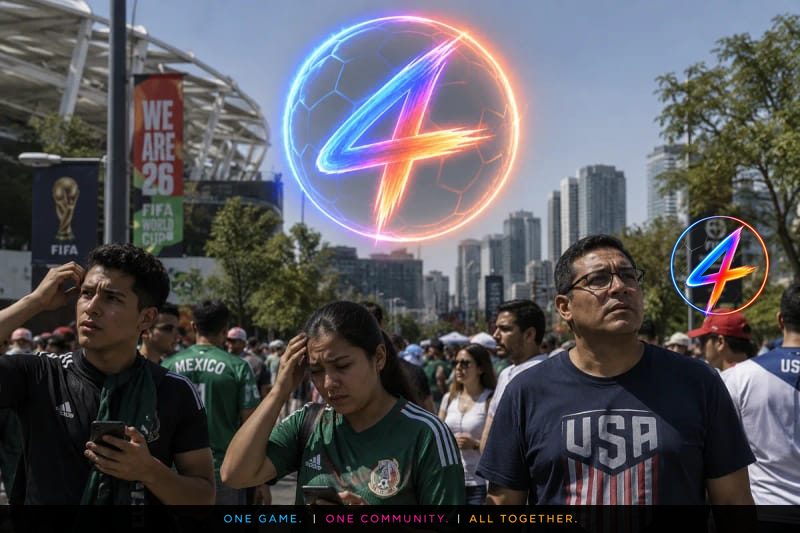
The World Cup doesn’t just land in stadiums—it takes over streets, shops, and neighborhoods too.
Officially, the tournament kicks off with a referee’s whistle. In reality, it starts much earlier: at airports where fans arrive with flags, in pubs testing their screens, on streets where police barricades appear, in hotels filling up, and in metro stations where languages from every corner of the globe suddenly mix.
That’s exactly what Mexico, the United States, and Canada are experiencing this summer. The 2026 World Cup is the first to feature 48 nations and the first co-hosted by three countries. FIFA calls Canada, Mexico, and the U.S. the three host nations; the tournament spans 16 cities and, by scale, is bigger than any edition before.
For locals, this isn’t some distant spectacle. The World Cup isn’t just a TV show when it rolls up to your doorstep. It’s the bus packed to the brim, the restaurant running double shifts, the taxi driver suddenly guiding Japanese, Colombian, or Dutch fans through the city. It’s residents noticing hotel prices climb, public spaces temporarily transformed, and the city, for a moment, feeling like it no longer belongs entirely to them.
Mexico: football as heritage—and a clash with the streets
In Mexico, the World Cup feels less like a guest appearance and more like a homecoming. The country has hosted past tournaments, and the Estadio Azteca is a near-mythical ground for many football lovers. Mexico City, Guadalajara, and Monterrey aren’t just hosting the event—they’re wearing it as part of their football identity.
The benefits are clear. Fan celebrations, tourist crowds, and global attention inject a temporary economic boost into local hospitality, hotels, transport, and small businesses. In Mexico City and Monterrey, the atmosphere in recent weeks has been described as especially vibrant, with street parties and international fans diving into the local football culture.
But in Mexico, the downsides are just as real. Big events strain neighborhoods where daily life is already intense. Streets close, informal trade gets restricted, security tightens, and residents question whether the profits actually reach the people keeping the city running. There have also been reports of protests and anti-World Cup sentiment in host cities, especially over concerns that public space and local interests are being sidelined for FIFA, sponsors, and tourist zones.
That’s Mexico’s duality: no one needs to teach the country what football means—but that’s exactly why it stings when the game gets wrapped up as an expensive global product.
United States: a sporting festival in a country still learning the sound of football
In the U.S., the World Cup tells a different story. Here, football isn’t the top sport in most cities—but it’s growing fast. In New York and New Jersey, where the final will be played, the game is gaining ground among youth and amateur players, even as it competes with basketball, American football, baseball, and ice hockey.
For locals, the World Cup can feel like a discovery. In cities like Los Angeles, Dallas, Miami, Kansas City, Philadelphia, and New York, communities that often exist side by side in the American sports landscape—Latino families, European expats, African communities, Asian fan groups, and American families introduced to football through their kids—come together.
The most uplifting image comes from public spaces. In Los Angeles, a city known for car culture, tens of thousands of fans hopped on buses and trains for World Cup matches. LA Metro added special services, discounted return fares, and extra staff; Reuters reported that for some games, tens of thousands took transit to stadiums or fan zones.
Maybe that’s one of the World Cup’s greatest gifts: it forces cities to see themselves differently. Can a city function with fewer cars? Can a station become a gathering place? Can football spark something that lingers after the tournament?
Yet the American side isn’t all euphoria. Ticket prices are a major sore point. There’s fierce criticism of dynamic pricing and steep costs, with even the cheapest experiences still out of reach for many local families. The Guardian reported that FIFA prioritized revenue maximization despite internal objections to dynamic ticketing.
Canada clinches round‑of‑16 spot with late strike in Los Angeles
There are also concerns over safety, immigration enforcement, and human rights. Human Rights Watch warned FIFA about risks tied to U.S. immigration controls, fan zones, stadiums, workers, and local communities. That concern touches a raw nerve: a World Cup aims to welcome the world, but in a country with heated immigration debates, not everyone feels equally welcome in the celebration zone. For locals in the U.S., this World Cup is also a mirror. It shows how big football can become—and how uneven access to the party can be. Canada: pride, hospitality, and the question of what it’s worth Canada experiences the World Cup differently than Mexico and the U.S. In Toronto and Vancouver, the tournament is a chance to showcase themselves as modern, diverse football cities. As a nation built on immigration, a World Cup here feels especially natural: nearly every match resonates with a community that feels represented. The atmosphere in Toronto and Vancouver has grown increasingly enthusiastic over recent weeks, despite initial skepticism from some residents. Fan zones, parades, and international supporters brought a cosmopolitan energy that fits the cities’ identities perfectly. For local businesses, it’s a gift. Restaurants, cafés, hotels, shops, and tourism services feel the influx. According to an Allianz Trade economic analysis, the World Cup is expected to deliver a temporary GDP boost of about $6.1 billion in the U.S., $1.7 billion in Mexico, and $1.3 billion in Canada—driven by foreign tourists, domestic travel, and security spending. But Canada faces the same question as its co-hosts: who pays, who benefits, and what’s left behind? Major events demand investments in mobility, safety, infrastructure, and organization. For residents, the line between “global prestige” and “local bill” can be razor-thin—especially when ordinary fans feel tickets, hotels, and official events are really meant for tourists and well-heeled visitors. The benefits: money, visibility, and a rare kind of connection The World Cup delivers undeniable advantages. Economically, there’s an immediate surge of visitors: hotels, restaurants, cafés, taxis, public transit, merchandise, tourism, and events all profit. For cities, there’s the soft gain: visibility. A city that shines during a World Cup sells itself for years to come. There’s also infrastructure. Some improvements in mobility, crowd management, and stadium environments can have lasting benefits. In Los Angeles, for example, the World Cup is being used to make public transit more attractive in a region traditionally dominated by cars. But perhaps the greatest win is more human. A World Cup brings the world to the street. In an era when societies often feel divided, football creates fleeting moments where strangers cheer, sing, wait, lose, and move on together. That’s not trivial. For many locals, the best thing about this World Cup isn’t the economic chart—it’s the night a square transforms into a world map of faces. The downsides: expensive tickets, neighborhood strain, and the sense that FIFA comes first Against those gains stand real costs. Ticket prices frustrate many locals. Hosting the World Cup in your own city but struggling to afford a match feels bitter. Criticism of dynamic pricing isn’t just about affordability—it’s about ownership. Who really owns the World Cup? The world? The city? Or whoever pays the most? Mobility and livability also take a hit. Closed streets, packed stations, security perimeters, noise, full hotels, and temporary price hikes disrupt daily life. For visitors, that’s part of the adventure. For residents, it can be exhausting. Then there’s the security dimension. A tournament spread across three countries and 16 cities is logistically impressive—but also vulnerable. Analyses highlight risks around transport, hospitality, digital systems, fraud, crowd control, and operational strain. And there’s the political layer. In the U.S., concerns over immigration enforcement and human rights are especially sensitive. In Mexico, questions about protest, safety, and public space loom large. In Canada, the focus is on whether public investment flows back to residents. The World Cup unites the world—but it also exposes where societies rub against each other. The real verdict comes only after the final whistle The people of Mexico, the United States, and Canada aren’t experiencing this World Cup the same way. For some, it’s a dream: the world at their doorstep, the city alive with color, the pub buzzing with voices. For others, it’s an expensive, crowded operation where ordinary people must make way for a global machine. Both feelings can be true at once. The 2026 World Cup is grand, loud, and historic. It turns cities into stages and streets into grandstands. It gives entrepreneurs opportunities, children memories, and football fans nights they’ll never forget. But it also asks something in return: money, space, patience, and trust. The true test for Mexico, the U.S., and Canada won’t come when the final is played—but when the flags are rolled up. That’s when we’ll see whether this World Cup was just a dazzling backdrop for the world—or a lasting win for the people who call these places home.